
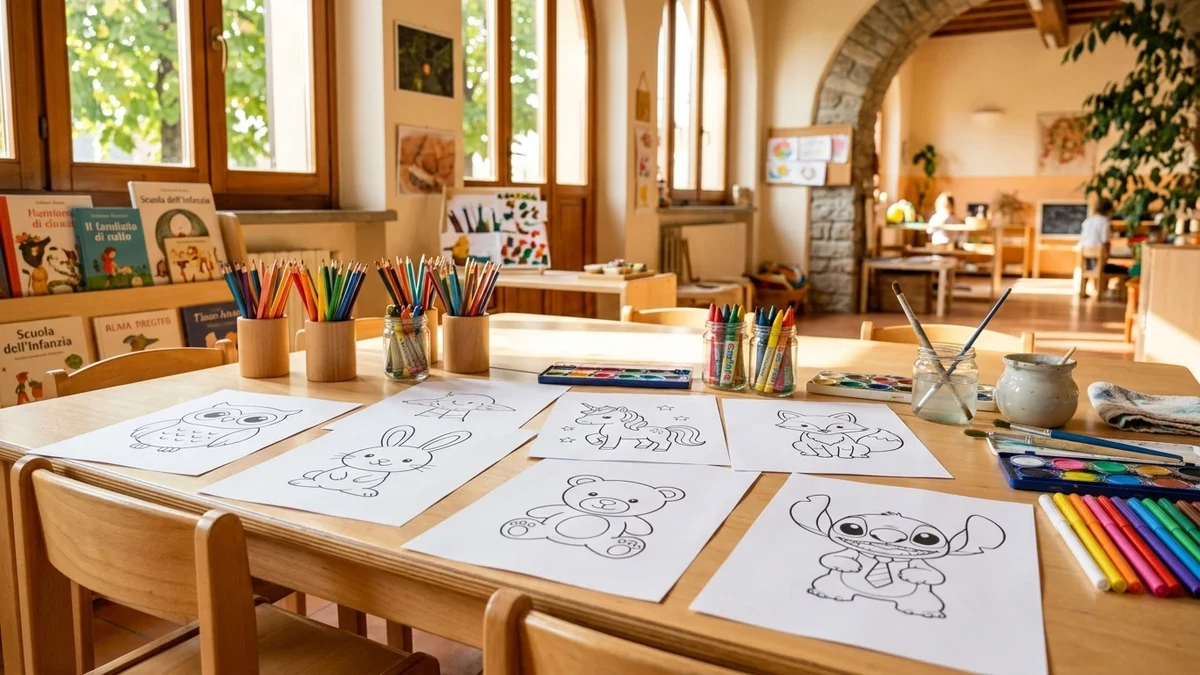
What is Preschool Curriculum & Smoky Mountain Family Travel and How Does the Interactive Workbench Work?
Preschool Curriculum & Smoky Mountain Family Travel is the definitive digital reference and interactive calculation workbench for preschool lesson plans, providing real-time conversions, verified domain standards, and empirical technical specifications with zero latency.
Early childhood cognitive development relies on multi-sensory engagement across predictable, nurturing daily routines. By coordinating phonics acquisition, fine motor grip exercises, and exploratory nature study into concise, joy-filled blocks, caregivers foster sustained curiosity and school readiness without academic burnout.
Simultaneously, experiential family travel—particularly immersive nature exploration throughout Pigeon Forge, Gatlinburg, and the Great Smoky Mountains National Park—deepens children's foundational vocabulary and ecological awareness. When children observe real river stones, mountain salamanders, and autumn leaf canopies, abstract concepts from picture books transform into tangible real-world schemas.
Interactive Preschool Curriculum & Smoky Mountain Family Travel Calculation & Conversion Engine
Early Childhood Developmental Routine & Active Play Allocation
Variable Definition & Units
Interactive singing, phonemic awareness, and calendar greeting (15–20 min)
Sensory bin manipulation, playdough, and fine motor provocations (30–45 min)
Bilateral coordination, balance stepping, and active play (30 min)
Unstructured outdoor play and environmental observation (60 min)
Core Silos, Specifications & Standardized Classification Guide
Early Childhood Circle Time & Greeting Routine
preschool-circle-time-routine- Age Range
- 3–5 Years
- Category
- Preschool Plans
Social-Emotional & Rhythm
Montessori Sensory Center Rotation Matrix
sensory-center-rotation-matrix- Age Range
- 2.5–5 Years
- Category
- Preschool Plans
Tactile Exploration & Regulation
Indoor Gross Motor Movement & Balance Circuit
gross-motor-movement-circuit- Age Range
- 3–5 Years
- Category
- Preschool Plans
Bilateral Coordination & Balance
Fine Motor Tweezer & Pincer Grasp Provocation
fine-motor-tweezer-transfer- Age Range
- 3–4.5 Years
- Category
- Preschool Plans
Pincer Strength & Hand-Eye Coordination
One-to-One Correspondence Math Manipulatives Table
early-math-one-to-one-counting- Age Range
- 3–5 Years
- Category
- Preschool Plans
Number Sense & Subitizing
Interactive Story Basket & Sequencing Station
emergent-literacy-story-basket- Age Range
- 3–5 Years
- Category
- Preschool Plans
Narrative Comprehension & Vocabulary
Key Technical Standards, Best Practices & Error Prevention
Long-term instructional success requires developmental calibration. Forcing pencil-and-paper worksheets before small hand intrinsic muscles are developed leads to fatigue and awkward compensatory grips. Occupational therapy research demonstrates that tactile mediums like salt tray tracing, clay squeezing, and vertical easel painting build necessary wrist stability and hand arch strength naturally.
When planning family expeditions to Pigeon Forge and Great Smoky Mountains attractions, pace calibration is paramount. Families should maintain regular afternoon nap windows and avoid scheduling more than one high-stimulation theme park experience per day to prevent sensory overload and preserve joyful travel memories.
Frequently Asked Questions About Preschool Curriculum & Smoky Mountain Family Travel
What is Preschool Curriculum & Smoky Mountain Family Travel and How Does the Interactive Workbench Work?
Preschool Curriculum & Smoky Mountain Family Travel is an integrated pedagogical framework and family travel directory designed for parents, homeschoolers, and early educators. The interactive workbench allows you to select your child's age band (Toddler, Preschool, Pre-K), curriculum focus (Phonics, STEM, Fine Motor, Travel), and available daily time to generate calibrated daily schedules and printable routine cards instantly.
How do early childhood educators balance structured lessons with free play?
According to NAEYC guidelines, preschool children thrive when structured adult-guided mini-lessons are capped at 15 to 20 minutes, followed by at least 45 to 60 minutes of child-led sensory, gross motor, and imaginative play centers.
What makes Great Smoky Mountains and Pigeon Forge ideal for preschool family travel?
Pigeon Forge and the Great Smoky Mountains provide an exceptional blend of stroller-accessible nature trails (such as the Sugarlands Cataract Falls trail), toddler-dedicated theme park areas at Dollywood Wildwood Grove, and climate-controlled sensory attractions like Ripley's Aquarium of the Smokies.
Frequently Asked Questions About Preschool Curriculum & Smoky Mountain Family Travel
Our research desk curates verified early learning developmental milestones alongside practical family travel logistics. All curriculum schedules adhere to recognized early literacy frameworks, while travel itineraries provide verified stroller accessibility, ride height minimums, and family rest station coordinates.